
Fresh as a daisy
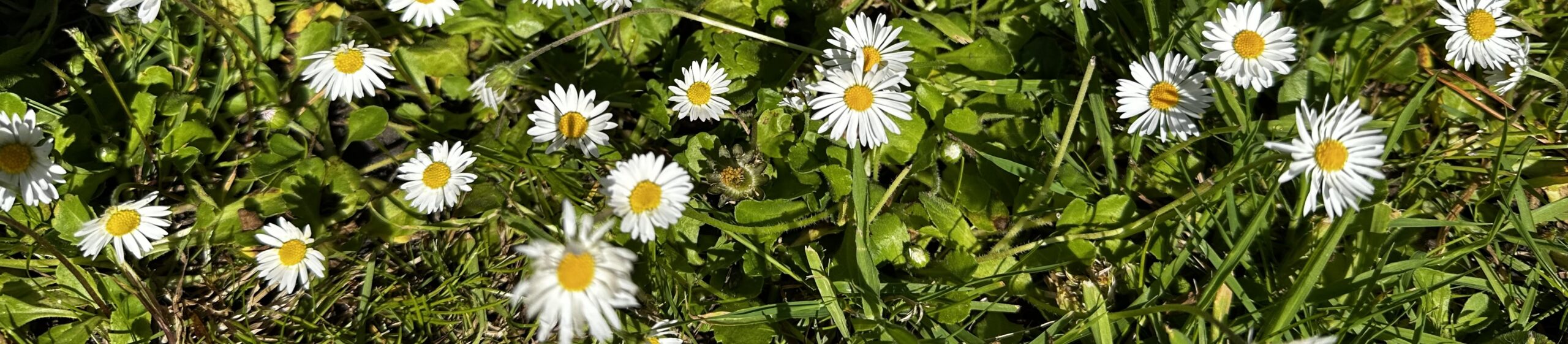
Bellis perennis is the common daisy. It grows in lawns, paths, and fields and is usually ignored or cut back. In homeopathic practice, it’s a straightforward and reliable acute remedy when the body has taken a physical hit and hasn’t recovered as expected. Something that happens a lot in sports and activities.
I use Bellis perennis most often after knocks, strains, or pressure to the body where the injury didn’t seem serious at the time. The person carries on, then later realises things aren’t right. The pain or discomfort is usually deep, sore, or bruised rather than sharp. There may be very little to see on the surface, but the tissue underneath clearly hasn’t settled.
This remedy is particularly useful when the problem shows up after the event. A fall, a physical effort, surgery, or prolonged strain looks minor initially, then becomes uncomfortable hours or days later. The body feels worked over. Pressure, movement, or sitting on the area often makes it worse.
When Bellis perennis is indicated, three practical features usually stand out. The sensation is bruised or tender rather than cutting or burning. The discomfort develops after strain, impact, or physical stress rather than immediately. The problem feels deeper than the skin or joints, involving muscle and connective tissue.
Although it’s widely known as an acute remedy, Bellis perennis also has a place when the body seems to hold onto physical stress over time. This can follow repeated minor injuries, physical work, or surgical procedures where recovery feels incomplete. The aim isn’t to treat a named condition, but to support tissue recovery when the system hasn’t reset itself properly.
From a scientific perspective, Bellis perennis has been studied for its effects on inflammation and tissue response, which aligns with how it’s used in practice. While homeopathy works on different principles from pharmacology, these findings help explain why this remedy consistently appears in situations involving deeper tissue stress.
The daisies in a lawn don’t look like medicine, and most people step over them without a second thought. In practice, Bellis perennis earns its place because it works when the picture fits. Simple plant. Simple use. Practical results.
The photo is from my lawn!


